Aria SWB Electronic Upright Bass stand
I recently bought a used Aria solid-wood-body electronic upright bass. Through an amp and speaker, it has that characteristic “woody” sound, similar to a real acoustic upright double-bass.
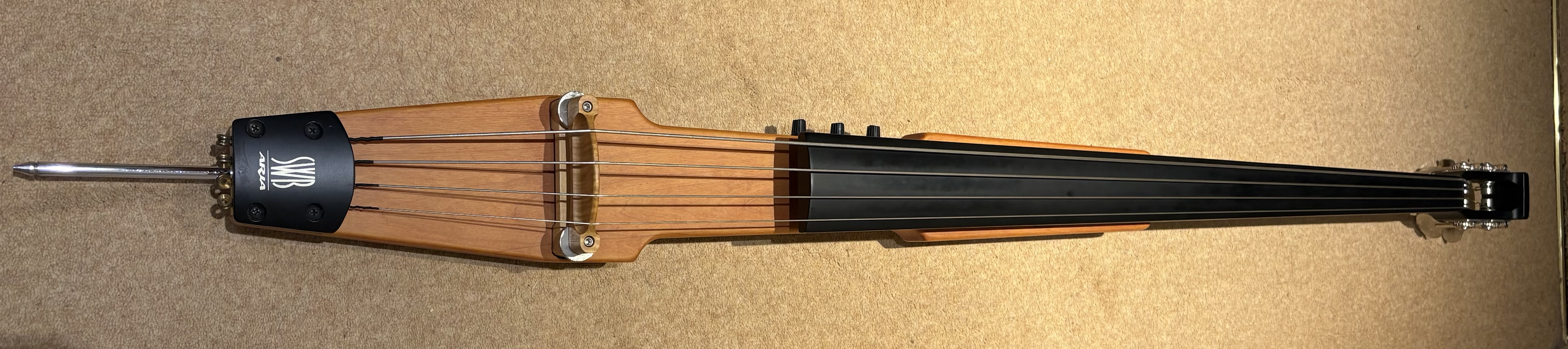
Unfortunately it was missing the hip support piece. Here’s a picture I found online.
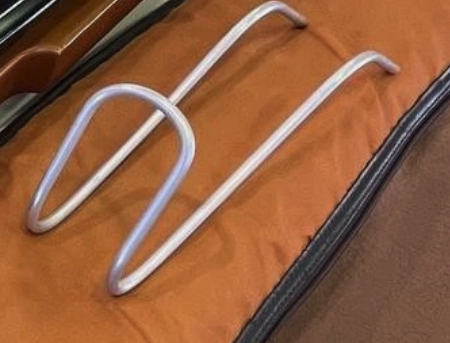
Standing on its bottom spike without the hip support, the slimness of the instrument allows it to rotate freely. This is frustrating when playing. This model is long discontinued (approx 2008) and it seems no spare parts are available.
I found a user manual for a similar model (in Japanese) and used an LLM to translate it, complete with the original images. I’ve put the English translation here.
It also shows a similar, but not identical hip support, and a rear-mounted stand (also unavailable). A rear plate on the instrument can accept screw fittings and seems to be the same as standard camera tripods, known as 1/4" 20tpi UNC (Unified National Coarse).
The side holes in my model measure just over 6mm diameter, and are lined with plastic material. The shank of a 6mm drill bit is a loose fit. A 1/4" jack plug is a smooth fit, suggesting the original tubing is an exact 1/4" size, i.e. 6.35mm. I plan to look for tubing of the correct diameter, and try to form it into a similar shape. Thin-walled tubing can buckle, so rod may be better. If I succeed, I’ll update this article. Meanwhile ..
Modified snare stand
This TalkBass post mentions using a snare stand to support the instrument. However just using the bare tube has a few disadvantages: the metal edge could scratch the instrument, and it doesn’t adequately solve the rotation problem.
I bought an inexpensive used snare stand to experiment with - a basic Stagg one, but I think any could work. First step was to remove the “claws” that usually hold the drum. I retained the tilt action part, to give the instrument a slight backward lean for playing.
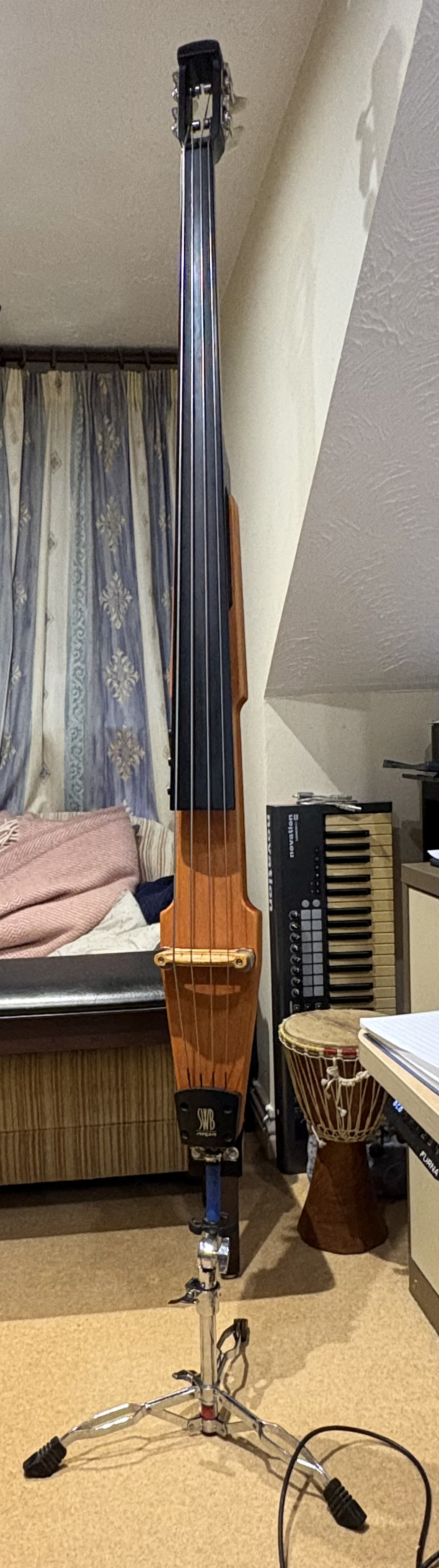
On top of the snare stand tube, I added a 20mm rubber bung from eBay, with a hole through the middle. It’s held in place with heat-shrink sleeving. That gave the base of the instrument a cushion to sit on.
I found that the rubber helped to prevent rotation, but it squeaked when the instrument moved slightly, and this sound came through the instrument piezo pickups. I solved that by adding another layer of heat-shrink.
Preventing rotation
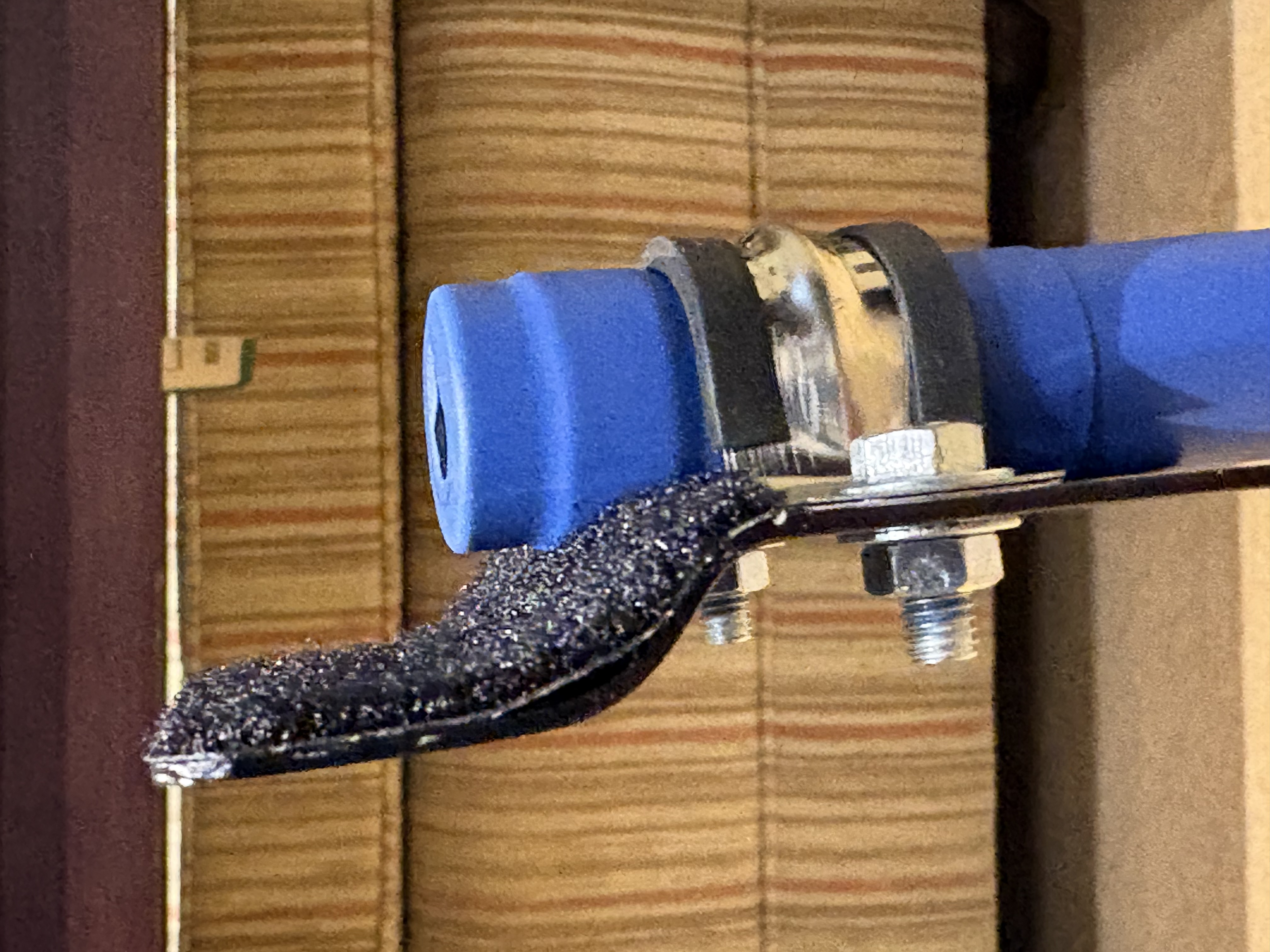
To solve the rotation issue properly, I cut out a piece of mild steel plate, approx 75mm x 85mm. This was shaped, drilled, primed and painted black. A 20mm pipe fixing (from eBay) clamps it neatly around the top of the stand. I used a clamp that has a rubber insert, which grips the tube well.
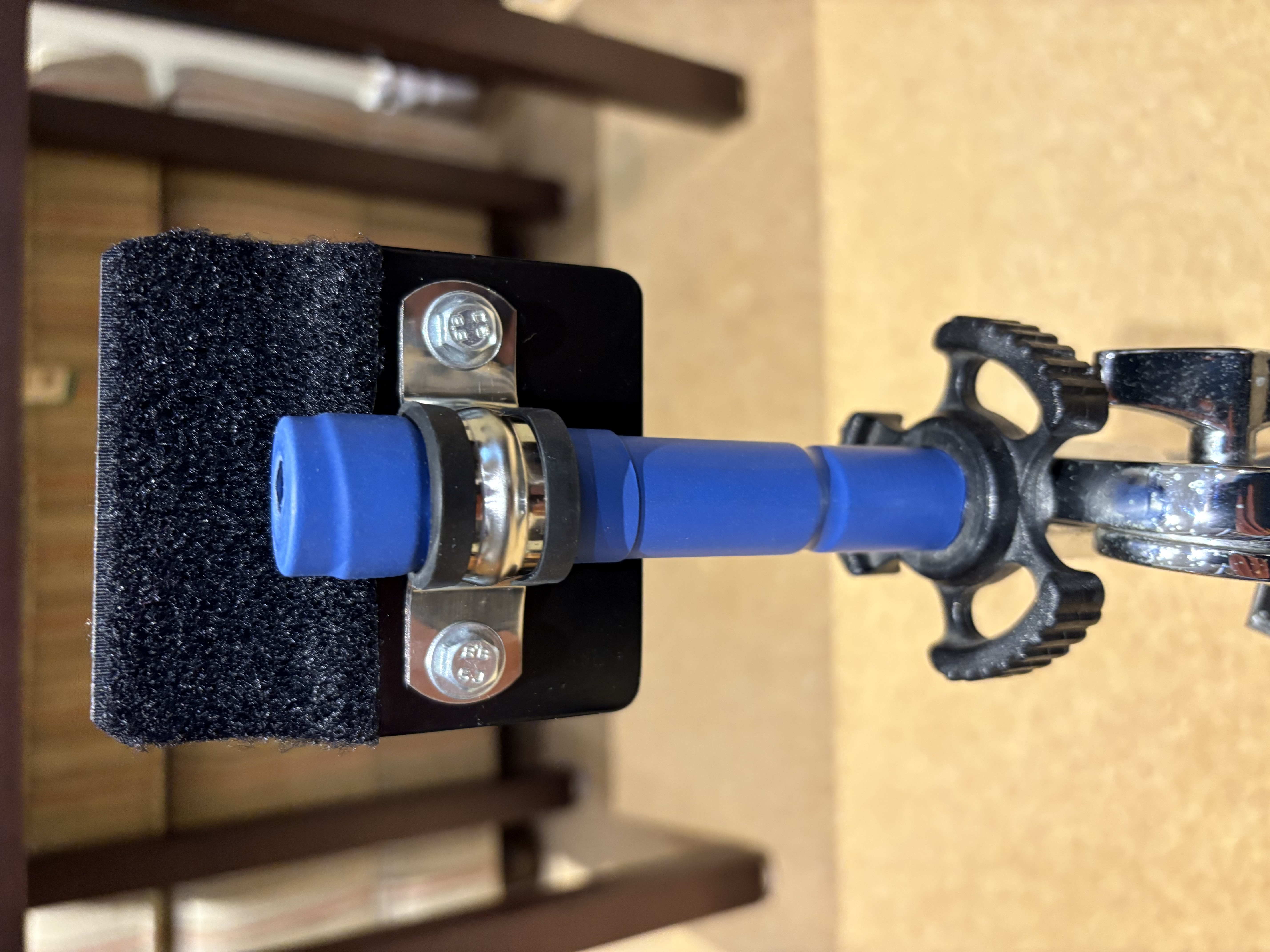
To prevent scratching the instrument, and to provide a snug fit, the plate has the soft-side of velcro (the “loop” side) applied.
Here is side view, showing the curve on the plate.
To put the instrument on the stand, the spike is extended enough to reach the bottom of the tube, and then retracted (using the wing nut) so it sits snugly on the velcro cradle.
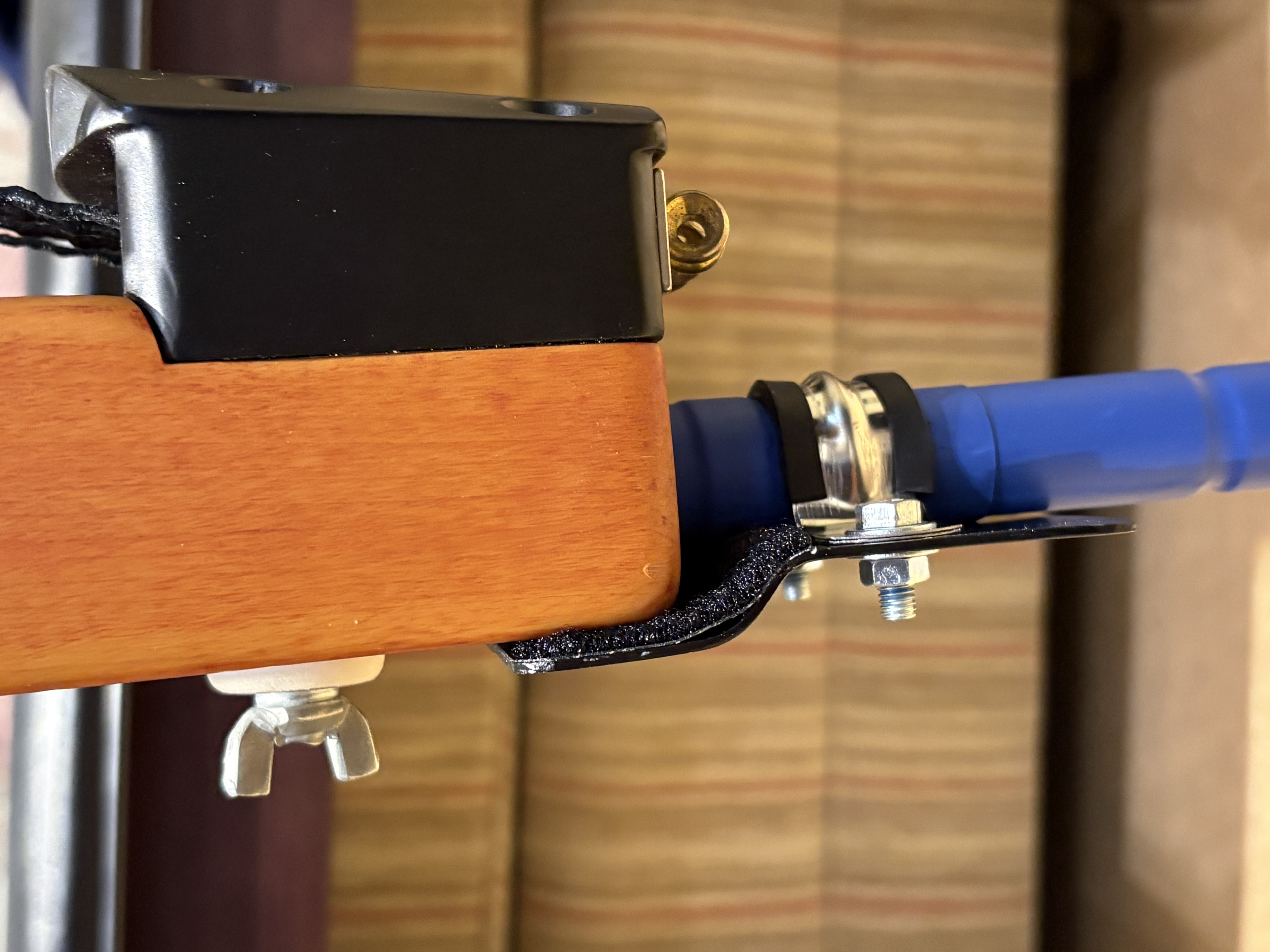
In use, the stand is quiet and supportive. The instrument can be left on the stand carefully when not being played, although a tripod with a wider base would be even better.